Specific Learning Difficulties SpLD
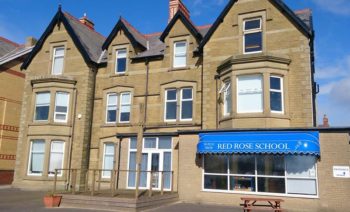
Red Rose School
Our Story So Far
At the Red Rose School we provide for the educational,
emotional and social needs of no greater than 48 boys and girls, aged between 7
and 16 years, of average and above average intelligence who experience Specific
Learning Difficulties and/or experiences which cause them to become delicate and
vunerable in a mainstream setting. Children on the Specific Learning
Difficulties continuum assessed as Dyspraxic or ADD/ADHD may be registered in
the School. Moreover, children who present with 'mild' aspergers traits may also
be registered in the School. In our experience many children who experience
specific learning difficulties have a tendency to be sensitive to some
educational environments. At the Red Rose School we recognise that many of our
children are delicate, particularly in a school situation and we strive to
ensure that all children feel comfortable and happy.
Our Package Take a
chartered educational psychologist, acknowledged as an expert in Learning
Difficluties, behaviour management and ‘delicate’ children. Add experienced
specialised teachers from each class and at least one dedicated assistant from
each class. Mix in the latest research and up to date resources. Season with an
ethos of Christain love and care and pour into a multi-sensory container. Cook
for a year or two and watch before your very eyes the wonder of 'self esteem'
grow each day.
At last ingredients are working to 'crack the code' of
each child's problems. Difficulties are overcome, coping strategies and skills
are developed and the child learns the values of respect and kindness to others.
Then it happens!
Where has that underconfident, 'I am stupid',
no eye contact child gone - now parents have 'little Jonny or Mary' back again -
smiles, confidence, straight backs, 'let me read that to you Dad', 'Mum, Did you
know that I am going to University?'
Our job done, the child grows wings
and flies away in the anticipation of the many good tomorrows.
That is
our package!
That is what we are dedicated to each day!
Our Defintion of
Sp.L.D. Persons identified as having a Specific Learning
Difficulty or Difficulties all show different intellectual and emotional
profiles, strengths and weaknesses, learning styles and life experiences. Within
this context, Sp.L.D. can be identified as distinctive patterns of difficulties,
relating to the processing of information, within a continuum from very mild to
severe, which may result in restrictions in literacy, language, number, motor
function and organisational skills.
Delicate
Children Children who are in a potentially failing situation
can become delicate. This will impair their ability to learn and co-operate with
other children and adults. They may have specific learning difficulties, or
perhaps they are' delicate and vulnerable' because of some temporary change in
their situation at home or school. There may be educational, social or medical
reasons for a child being described as delicate. It is important to address this
as soon as possible otherwise their learning and emotional needs can become more
difficult to deal with in the school setting.
It is important to
recognise the additional needs of delicate and vulnerable children and we at the
Red Rose School place a high priority on providing a learning environment that
caters for the diversity of emotional and learning needs in order to help
children achieve their potential.
Training Eagles Just as
the eagle shields and cares for its young, the school shields and cares for the
pupils in its charge. All of our pupils have felt the previous 'failures' caused
by their learning difficulties and, as such, it is essential that they feel safe
and unthreatened in their new school environment. Just as importantly, our
pupils must learn to trust again û this can only be done by staff establishing a
loving and caring relationship with each child in their charge.
When the
eaglet reaches maturity the mother eagle 'stirs up its nest and hovers over its
young, spreads its wings to catch them and carries them on its pinions'. In
reality, she takes the nest out from under her eaglet. The eaglet tumbles
downward but before it hits the ground she catches it and carries it back to
safety. This process is repeated until nature takes over and the eaglet spreads
its wings and flys for the first time. Soon the young eagle is soaring high
above the storms.
This analogy epitimises the challenges we must set for
our pupils. Once they feel safe and 'strong', we will start to stretch
(challenge) them until the time comes when they can 'fly' on their own û this
done, our job is finished and they can either reintegrate back into mainstream
school or go on to college.
Inclusion Inclusion
implies that the needs of all children, irrespective of their strengths or
difficulties, will be met in the mainstream setting. We at the Red Rose strive
to achieve that ideal. We are committed to the principles of inclusion, of
social equality and full curriculum access for all children. We recognise
however that some children, because of their social, emotional or learning
needs, may not be 'ready' for full inclusion. In this situation these children
may become 'temporary casualties' of the desire to pursue this ideal. At the Red
Rose School we respect and acknowledge the necessary benefits of inclusion and
strive to ensure that all our children, while in our care, enjoy as much as
possible an inclusive education. Our aim is always to re-integrate all children
to mainstream school and therefore we view our role as firmly part of the
inclusion agenda and the inclusive educational process with the education
authorities who place children at our school.
There are examples in
practice of children who have initially failed in an inclusive setting, but
after a period of supportive teaching in a structured and dedicated resource for
dyslexia, are able to return to a mainstream setting and benefit more
effectively, socially and educationally, from mainstream schooling (from
Dyslexia and Inclusion: Classroom Approaches for Assessment, Teaching and
Learning. Reid, G. 2004, David Fulton/NASEN publications).
Most of the
children admitted to our school have failed in the mainstream setting and have,
not surprisingly, low levels of self esteem, as well as low attainments. But
within our specialised resource the children progress and are all eventually
re-admitted to mainstream schools or further education. Within this specialised
resource the principles of inclusion are operating. All children have an
entitlement to a full curriculum and to have their social, emotional and
educational needs met. Inclusion needs to be seen as a flexible package to meet
the diverse needs of children. Mainstream schools are of course a key part of
that package but just because a child is placed in a mainstream classroom does
not necessarily mean the child is receiving the benefits of an inclusive
education. At the Red Rose School we see ourselves as part of that flexible
package to achieve full inclusion for all children with specific social,
emotional and learning needs (from Dyslexia and Inclusion: Classroom Approaches
for Assessment, Teaching and Learning. Reid, G. 2004, David Fulton/NASEN
publications).
Improvements To give a
flavour of the improvements made, of the 75 students who have left the school
the average improvement in years is 7, 6 and 7 for reading, spelling and number
respectively.
We hope you enjoy your visit to the Red Rose School
Website.
|